The CLAS experiment at the CEBAF accelerator of the Jefferson Laboratory, in the United States, with the collaboration of INFN researchers, has published on Nature a study on the behaviour of quarks that could unveil a mystery that has lasted 35 years. In 1984 the European Muon Collaboration (EMC) of CERN in Geneva discovered that the quarks that make up the protons and neutrons of the atomic nuclei behave differently than the quarks that make up free protons and neutrons. The unexpected phenomenon – which scientists called the EMC Effect from the acronym of their experiment – remained however all these years without a universally accepted explanation. Now, the new research by CLAS could shed light on this unsolved question: the result obtained shows that the internal structure of protons and neutrons changes when these particles aggregate forming related pairs: in these pairs a strong overlap of protons and neutrons is created, that gives the quarks inside them more space to move and leads them to move more slowly. The analysis represents a step forward for the study of low-energy QCD in nuclear systems.

The record neutrino observed by KM3NeT
07 February 2025
Read more The record neutrino observed by KM3NeT
INFN celebrates the STEM WEEK and the International Day of Women and Girl in Science 2025

International Year of Quantum Science and Technology, 2025
03 February 2025
Read more International Year of Quantum Science and Technology, 2025

A new generation of plastic scintillators thanks to 3d printing
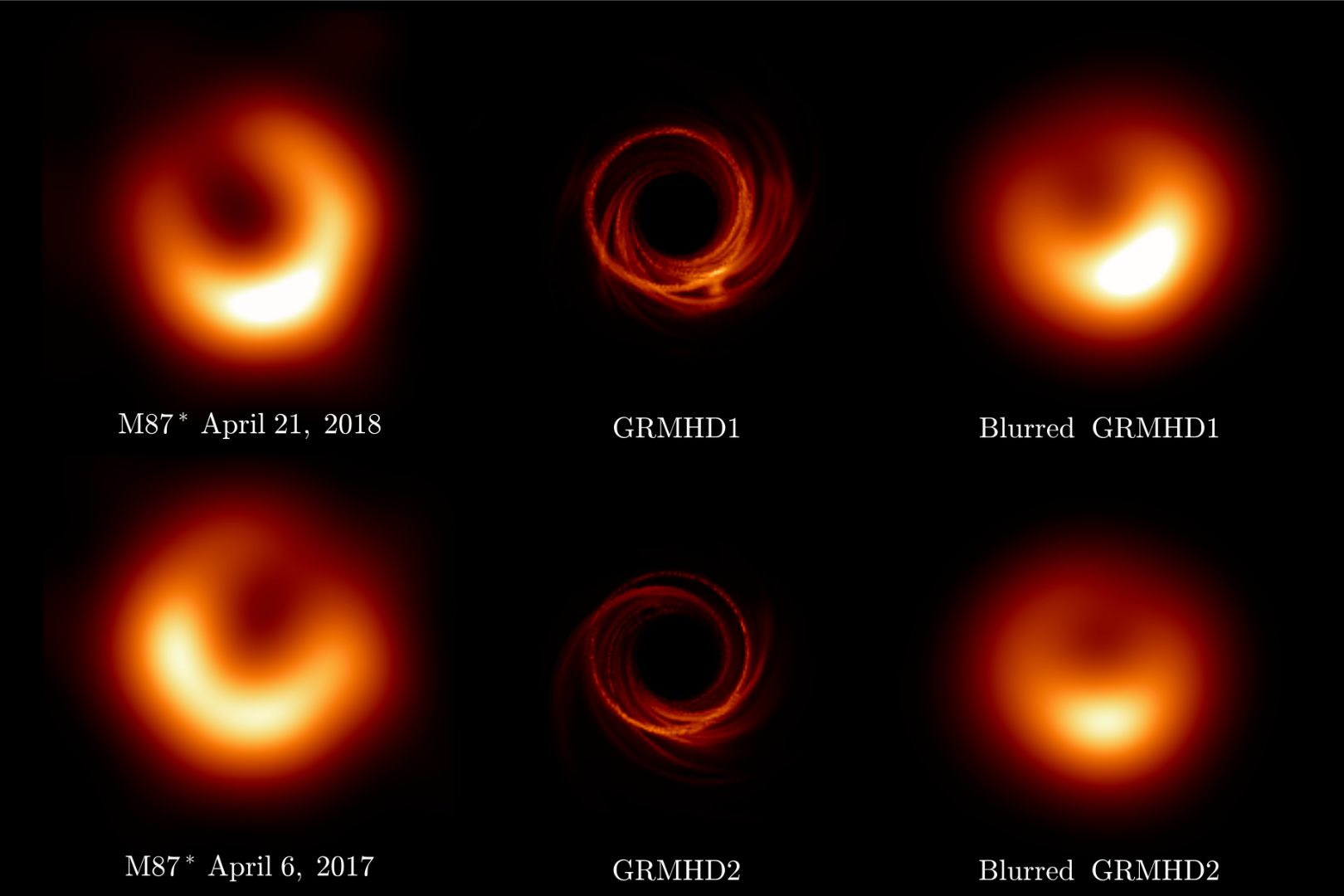
Capturing the accretion flow of M87* black hole
22 January 2025
Read more Capturing the accretion flow of M87* black hole