The dark photon is a particle similar to the electromagnetic wave photon but, unlike the latter, has a small mass. It is in reality a hypothetical particle, predicted by certain recent theoretical models that describe dark matter, but never observed in experiments. Thanks to the new results of the BaBar experiment, physicists who from all over the world are trying to understand whether or not this particle actually exists, have new and important information to limit the hunting ground. BaBar is an international experiment at the Stanford Linear Accelerator (SLAC) in California, USA, in which Italy, with INFN, has a leading role with the construction of the magnet and of fundamental components of the detector: the peak detector and the muon detector. The accelerator was in operation from 1999 to 2008 and the last year of data acquisition was dedicated precisely to the search for the dark photon. From the data analysis important information now emerges that excludes possible “hideaways” of this hypothetical particle, significantly narrowing the field of investigation. The results were published in the Physical Review Letters journal. In search of the dark photon, INFN is participating in a new experiment that will be called PADME (Positron Annihilation into Dark Matter Experiment) and will enter into operation at the INFN Frascati National Laboratories (LNF) in a new experimental room of the linear accelerator test facility, the Beam Test Facility (BTF). The experiment will be the result of an international collaboration involving researchers from Cornell University and from the College of William and Mary (USA), from the MTA Atomki institute in Debrecen, Hungary, and from the University of Sofia, Bulgaria. PADME http://home.infn.it/newsletter-eu/pdf/NEWSLETTER_INFN_26_italiano_pag11.pdf

The record neutrino observed by KM3NeT
07 February 2025
Read more The record neutrino observed by KM3NeT
INFN celebrates the STEM WEEK and the International Day of Women and Girl in Science 2025

International Year of Quantum Science and Technology, 2025
03 February 2025
Read more International Year of Quantum Science and Technology, 2025

A new generation of plastic scintillators thanks to 3d printing
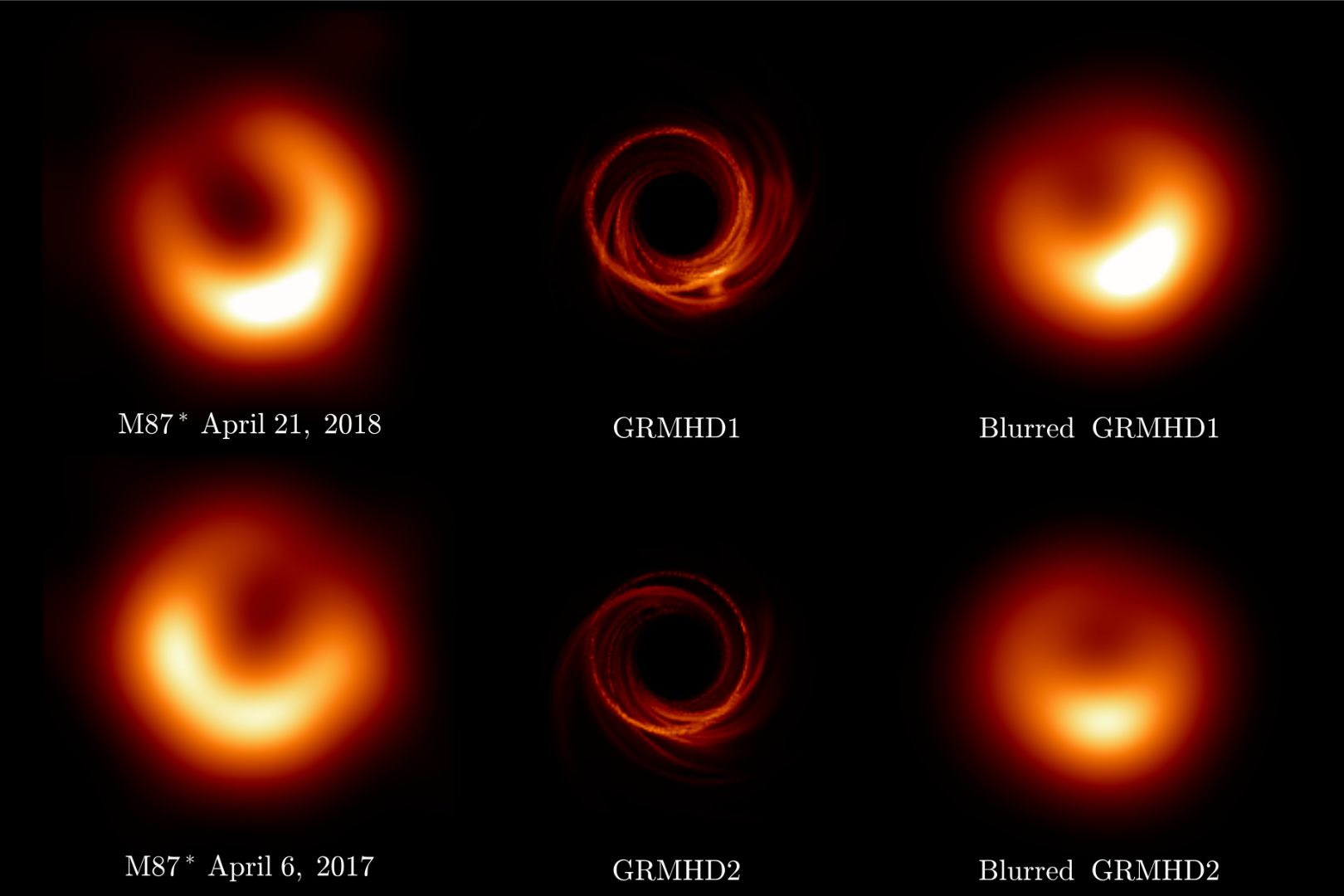
Capturing the accretion flow of M87* black hole
22 January 2025
Read more Capturing the accretion flow of M87* black hole