The natural show represented by the hypnotic and changing figures drawn in the sky by the coordinated and synchronised movements of starlings is the result of a collective behaviour that many bird species can adopt to promptly respond to attacks from their predators. In a similar context, the study of the properties of individual birds’ motion is indispensable for trying to understand the evolution of the dynamics of flight of one starling, which constitutes, in the light of the changeability that distinguishes its components, one of the most exemplary cases of a complex system. To provide an answer to how birds regulate their speed within a group of their own, INFN and Sapienza University of Rome researchers belonging to the ‘Cobbs’ (Collective behaviour in biological systems) group of the CNR Institute of Complex Systems (CNR-ISC) propose a new mathematical model. This model focuses on describing a particular species that is very widespread in our country and in the scientific literature, the starling (Sturnus vulgaris). The result, published on May 10 in Nature Communications, opens new roads for understanding biological systems in the field dedicated to developments in robotics and engineering.

The record neutrino observed by KM3NeT
07 February 2025
Read more The record neutrino observed by KM3NeT
INFN celebrates the STEM WEEK and the International Day of Women and Girl in Science 2025

International Year of Quantum Science and Technology, 2025
03 February 2025
Read more International Year of Quantum Science and Technology, 2025

A new generation of plastic scintillators thanks to 3d printing
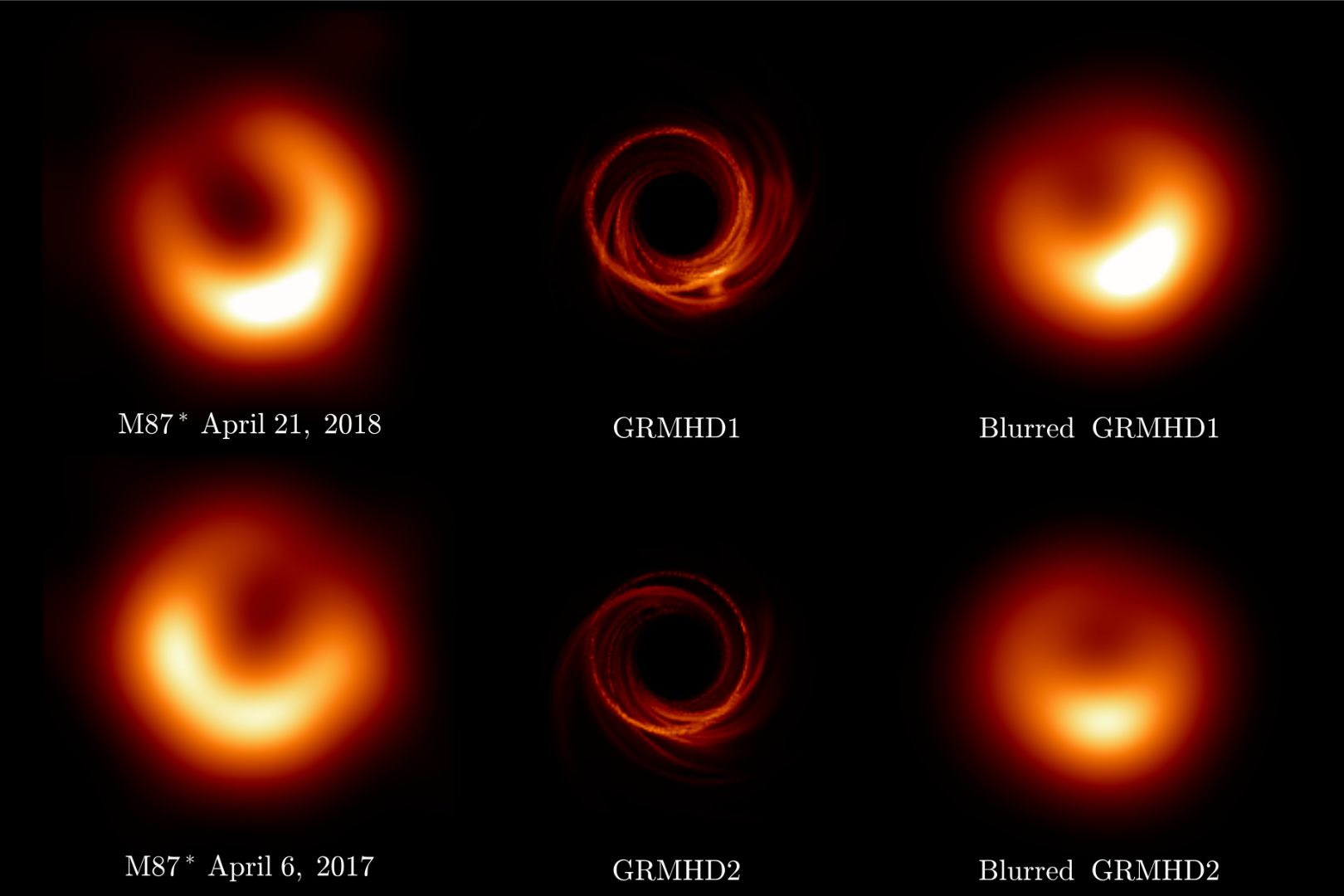
Capturing the accretion flow of M87* black hole
22 January 2025
Read more Capturing the accretion flow of M87* black hole