After the restart of the LHC (Large Hadron Collider) in June 2015, with a record-breaking collision energy of 13 TeV, and its first months of data taking with proton collisions, the super accelerator
at CERN in Geneva is moving to a new phase. Inside the LHC’s beam pipe, the 27 km magnetic ring that lies at a depth of 100 metres beneath the French-Swiss border, the first lead ion collisions at an energy of slightly more than PeV (100 eV) have started. This is the highest collision energy between nucleon pairs reached in an experiment in collisions between nuclei (5 TeV per nucleon).
Data from these experiments will be collected for one month by the LHC’s four experiments, ATLAS, CMS, ALICE (specifically designed to study collisions of this type) and LHCb, which is recording data from collisions between ions for the first time. These collisions will allow physicists at CERN – including around 1500 from Italy, half of whom coordinated by the INFN – to study a state of matter, called the quark-gluon plasma, a soup of particles that existed briefly a few millionths of a second after the Big Bang. These collisions will allow scientists to recreate the conditions that were present in the very first moments of the universe, and to study their properties in the laboratory.

The record neutrino observed by KM3NeT
07 February 2025
Read more The record neutrino observed by KM3NeT
INFN celebrates the STEM WEEK and the International Day of Women and Girl in Science 2025

International Year of Quantum Science and Technology, 2025
03 February 2025
Read more International Year of Quantum Science and Technology, 2025

A new generation of plastic scintillators thanks to 3d printing
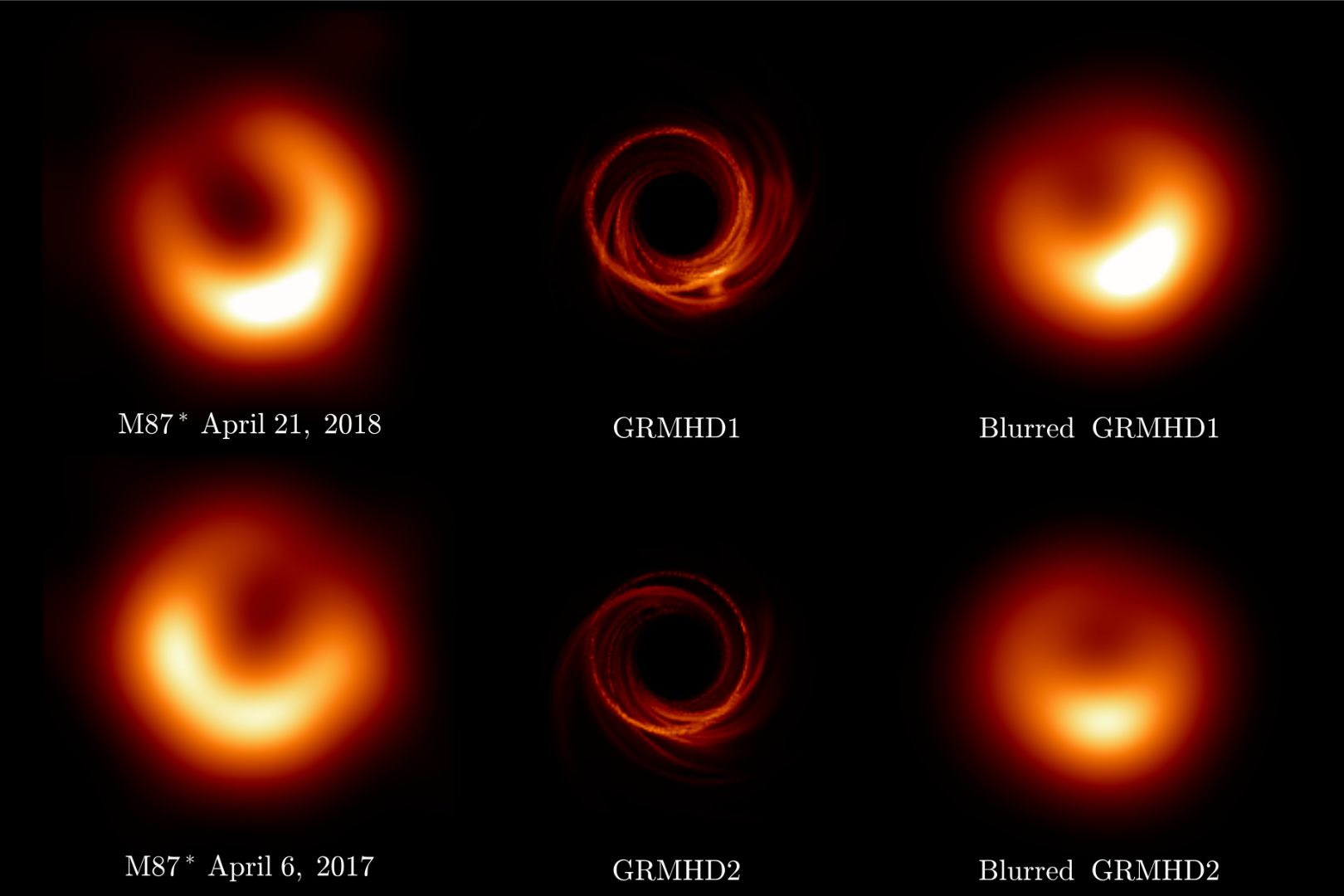
Capturing the accretion flow of M87* black hole
22 January 2025
Read more Capturing the accretion flow of M87* black hole